Paper Trail, Not Red Tape: How to Get a Copy of Your Dental Records Without the Awkwardness
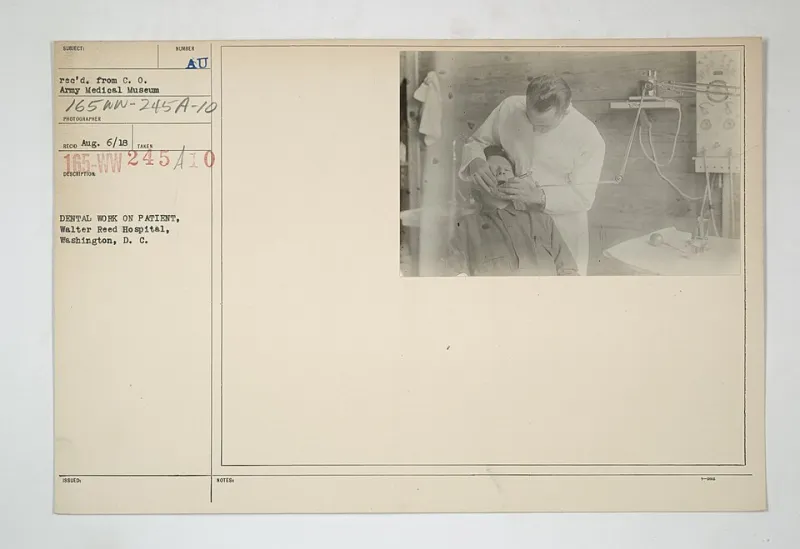
Photo: Unknown authorUnknown author or not provided, Public domain, via Wikimedia Commons
There's a strange assumption that floats around dental practices: that the notes belong to the building, the dentist, the system — anyone but the person the notes are about. It's understandable. Nobody hands you a folder on the way out. You sit in the chair, someone taps at a keyboard, and you leave with a new appointment card and no real idea what was written down.
But those notes are your personal data. Not a favour, not a special privilege for difficult patients — just information about your own mouth, held on your behalf. Asking for a copy is a normal, everyday thing that reception teams deal with regularly. It only feels awkward because most of us have never done it.
So let's take the mystery out of it.
What's actually in a dental file
People often imagine a single sheet of paper. In reality, a record is a collection of things built up over years, sometimes decades, sometimes across three different practices in two different counties.
Broadly, you'll find:
- Clinical notes — the running commentary of every appointment. What was examined, what was found, what was done, what was advised, and whether you took that advice. It's written in a kind of clinical shorthand, which is why it can read like code.
- Charting and measurements — which tooth is which, which ones have fillings or crowns, and the little numbers a hygienist calls out during a gum check. That's your periodontal chart, and it's a genuinely useful record of gum health over time.
- Radiographs — X-rays, including bitewings and any larger panoramic images. Ideally you should get the actual images, not just a sentence saying one was taken.
- Treatment plans and estimates — what was proposed, what it would cost, and what you agreed to. For NHS treatment, this often includes the relevant claim forms.
- Consent forms — the paperwork behind anything more involved than a check-up.
- Correspondence — referral letters to specialists, lab prescriptions for crowns or dentures, letters back from hospitals or orthodontists.
- Appointment history — including the ones you missed. Yes, those are noted. No, it's not a black mark on your character.
What you generally won't get is anything containing another person's information, or a professional's private working thoughts. Notes are meant to be factual, not a diary.
Reasons people ask (none of which need justifying)
You don't have to explain yourself. That's worth saying plainly, because the fear of being asked "why?" stops a lot of people from ever making the request.
That said, the common reasons are worth knowing, because they show how ordinary this is:
You're getting a second opinion. A new dentist can look at a chart and a set of X-rays and give you a far more useful answer than they could from a five-minute conversation in a car park.
You're moving. Relocating for work, heading to university, or simply switching practice because the parking is impossible. Records don't follow you automatically — someone has to send them, and often that someone is you.
You're planning something bigger. Orthodontics, implants or a smile makeover usually start with a proper look at your history. Having the file ready saves an appointment.
Something didn't feel right. If you're unhappy with treatment or trying to understand a decision that was made, the notes are the factual base you'd want before raising it. A complaint built on memory alone is shaky ground for everyone.
Or you're just curious. Perfectly valid. Some people want to know what their gum measurements were three years ago, or whether that filling was replaced or just polished. Curiosity is not a red flag.
The bit most people don't know
Under UK data protection law — the UK GDPR and the Data Protection Act 2018 — you have a right to access your own personal data. In practice, that means requesting a copy of your dental records, usually by making what's called a subject access request.
A few practical points:
- It's usually free. A practice can only charge a reasonable fee if a request is genuinely excessive or repetitive — not as a standard admin charge.
- There's a time limit. The practice should respond within one month, though complex requests can be extended by up to two further months, with an explanation.
- You may need to prove who you are. Photo ID and confirmation of your address is normal, and it's a good sign — it means they're careful about who they hand records to.
- Refusals are rare and narrow. A dentist can withhold specific information if releasing it would cause serious harm to you or someone else, or would reveal another person's data. Blanket refusals aren't a thing.
- The paper belongs to the practice; the information belongs to you. Slightly legalistic, but it explains why you might get copies rather than originals.
One more thing worth tucking away: NHS dental records for adults are generally kept for eleven years after your last appointment, and for children until their 25th birthday. Private practices set their own retention periods, usually along similar lines. If it's been a very long time since you were seen anywhere, that's worth knowing before you go digging.
A script that does the job
This is the part people dread, so here it is in full. Nothing dramatic, nothing accusatory.
By email, which is easiest because it creates a written trail:
Hello,
I was a patient at your practice and I'd like to request a copy of my dental records — my clinical notes, treatment plans and any X-rays you hold. I'm happy to provide ID to confirm my identity.
Could you let me know how you'd like me to do that, and roughly how long it might take?
Thanks very much, [Name, date of birth, address]
If you'd rather phone, something like: "Hi, I'd like to request a copy of my dental records. Can you tell me the best way to do that — email or in writing?" That's it. No preamble required.
A couple of small courtesies that genuinely help: ask mid-morning rather than at the end of a busy day, and mention if it's urgent, like an appointment elsewhere next week. Reception teams appreciate a deadline they can work with.
When the file lands
It will probably look chaotic. Abbreviations, numbers, dates in boxes. Don't panic — this is a working document, not a patient-friendly summary.
Ask whether a dentist can talk you through the main points, especially if you're using the records for a second opinion or a complaint. Most practices will happily spend five minutes explaining what a note means. If you're passing the records to another dentist, ask for the X-rays as image files rather than screenshots — quality matters when someone is judging a root canal from a photograph.
And if you're turned down flat, stay calm: ask to speak to the practice manager and mention that you're making a subject access request under data protection law. That's normally the end of the conversation. The Information Commissioner's Office is there if it genuinely isn't.
At This Is It Dental, we think a confident smile starts with knowing what's going on — in your mouth and on your file. Asking to see your records isn't distrustful. It's just good manners, pointed in your own direction.