The 'Scale and Polish' Problem: Dental Words That Make Prevention Sound Optional
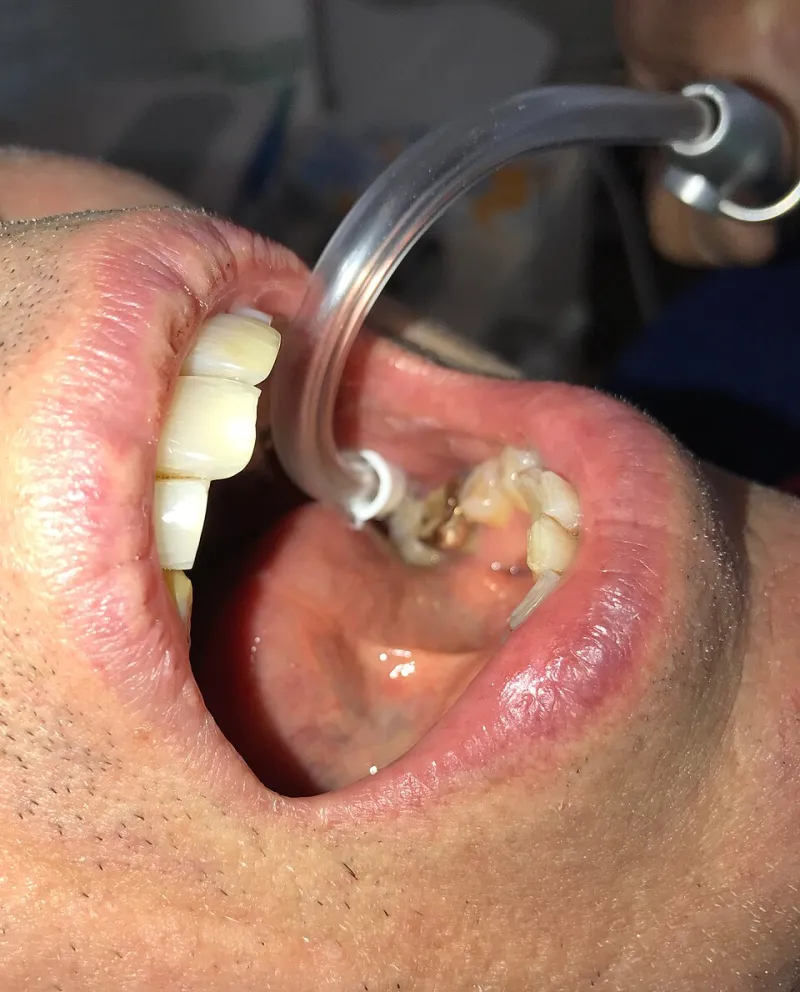
Photo: PeterEasthope, CC BY-SA 4.0, via Wikimedia Commons
There is a phrase in British dentistry that I would happily see retired: 'just a scale and polish.'
It arrives in the same breath as 'just a check-up' and 'just a clean.' All three are delivered kindly, usually by someone trying to reassure you that nothing terrible is happening. And all three quietly tell the patient that the appointment they are about to have is minor, optional, and probably about appearances.
The words we use shape what we think we are buying
Consider what 'scale and polish' actually conjures. Scale: something you do to a fish or a kettle. Polish: something you do to shoes, or silverware, or a car. Neither word sounds medical. Neither sounds urgent. Put together, they sound like the dental equivalent of valeting a vehicle — nice if you have the time, easy to skip if money is tight.
Now consider what actually happens in that appointment. Someone measures the pockets around every tooth with a slim probe and records a number for each section of your mouth. They look at whether your gums bleed when touched. They remove hardened calculus from above and below the gumline, sometimes with an ultrasonic instrument, sometimes with hand scalers, sometimes both. They talk to you about the gaps between your teeth and the angle of your brush. They may apply fluoride varnish. They may flag an area that needs watching.
That is not a valet. That is monitoring, treatment, and coaching, bundled into twenty-five minutes. Calling it a polish undersells it to the point of misrepresentation.
The cosmetic bit is the smallest bit
The polishing stage — the spinning brush and the gritty paste — is real, and it does help lift surface staining from tea, coffee and red wine. But it is the least clinically important part of the appointment. If you stripped polishing out entirely, the gum care would still matter. If you stripped out the gum care and kept only the polish, you would have a cosmetic treatment with almost no health benefit.
Which is why it is slightly mad that the polish is the word that stuck.
Gum disease does not announce itself
Here is the uncomfortable part. Gingivitis and periodontitis are largely silent. Bleeding when you brush is easy to dismiss as 'normal for me.' Loose teeth feel like bad luck rather than the end of a long process. By the time something hurts, a fair amount of damage may already be done — and gum disease is a leading cause of tooth loss in UK adults, not a rare edge case.
So when the appointment that catches all of this early is described in language borrowed from car washing, we should not be surprised that people deprioritise it. The words are doing the deprioritising.
Asking a patient to pay for something you have called optional
There is a practical consequence too. In England, hygiene work often sits within an NHS band alongside other treatment, and in private practice it is usually a separate fee. Either way, a patient hearing 'scale and polish' and being asked for money is being asked to pay for something that sounds like a treat. That is a difficult sell, and it breeds the suspicion that dentistry is upselling cosmetics rather than protecting health.
Reframe the same appointment as gum monitoring and treatment, and the value becomes obvious. Same hands, same instruments, same time in the chair. Completely different conversation.
A few other phrases that need a rethink
'Scale and polish' is not the only offender. We say 'deep clean' when we mean root surface debridement, which is a genuinely different and more involved procedure. We say 'a bit of gum disease' when we mean an active, progressive condition. We say 'we will just take a quick X-ray' without explaining why that particular view, at that particular moment, is worth the radiation. We say 'band 2' to a patient who has no idea what bands are.
None of this is malice. It is shorthand, developed for speed between clinicians and then accidentally spoken aloud to people who have never heard it before.
A short glossary you can actually use
- Plaque — the soft, sticky film of bacteria that forms daily and is removed by brushing and cleaning between teeth.
- Calculus (tartar) — plaque that has hardened onto the tooth and cannot be brushed off. It needs professional removal.
- Gingivitis — inflammation of the gums, usually reversible, often shown by bleeding when you brush.
- Periodontitis — deeper infection affecting the bone that supports teeth. Not reversible, but manageable and worth catching early.
- BPE score — the six numbers your dentist calls out during a gum check, scoring each section of your mouth from 0 to 4. Ask what yours were and what changed since last time.
- Root surface debridement — cleaning below the gumline where pockets have formed. Sometimes called a deep clean, but it is a different job from a routine hygiene visit.
- Fluoride varnish — a painted-on coating that strengthens enamel, commonly offered to children and to adults at higher risk of decay.
- Fissure sealant — a protective coating on the biting surfaces of back teeth, often used for children.
- Polishing — the cosmetic finishing step that lifts surface stain. Pleasant, but the least medically important part of the visit.
Questions that get you a better answer
Ask what your gum scores were, and whether they have changed. Ask whether the bleeding you are seeing is something to watch or something to treat. Ask how often you actually need this appointment given your mouth, rather than a generic six months. Ask what would happen if you skipped it for a year. Ask what you should be doing at home that you are not already doing.
A good clinician will welcome every one of those questions. If the answers are vague, you have learned something useful.
Say what it is
Preventive care has an image problem, and part of that is our own vocabulary. The appointment that keeps gums healthy and teeth in your head deserves a name that sounds like healthcare. Gum assessment and treatment. Hygiene therapy. Periodontal monitoring. Something honest.
Because the moment we stop calling it a polish, patients stop hearing an optional extra — and start hearing what it actually is.